
Every time a piston moves, the engine’s valves have to open and close at just the right moment.
Intake valves let air and fuel in. Exhaust valves let burned gases out. How early or late those valves move, and for how long, is called valve timing. For decades, that timing was fixed. A camshaft ground at the factory set one schedule for every driving situation, from idling at a red light to passing on the highway. That single schedule is always a compromise. Variable valve timing, or VVT, removes much of that compromise, and today it appears on nearly every gasoline engine on the road.
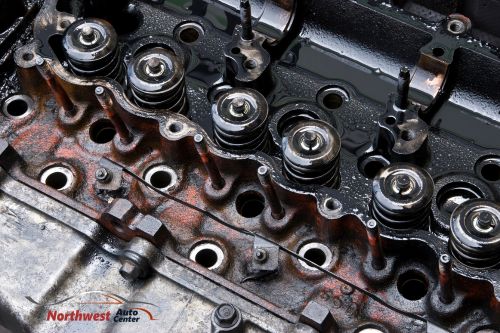 How Variable Valve Timing Works
Most VVT systems use engine oil pressure to do the work. A cam phaser sits on the end of the camshaft, where it can rotate the cam slightly ahead of or behind the timing chain. An oil control solenoid, directed by the engine computer, sends pressurized oil to one side of the phaser or the other.
The computer watches engine speed, load, throttle position, and temperature, then adjusts cam position many times per second. Some engines adjust only the intake cam. Others adjust both intake and exhaust, and a few also change how far the valves open. The names differ by brand, but the goal is the same.
Benefits of VVT Systems
More Power Across the Rev Range
At low engine speeds, air moves slowly, so the engine benefits from closing the intake valves early to trap a full charge in the cylinder. At high speeds, air moves fast and keeps flowing in even as the piston starts back up, so holding the valves open longer packs in more air.
A fixed cam can favor one of those conditions, not both.
VVT shifts the timing as the engine climbs, which gives a broader torque curve. Drivers feel it as stronger pull from a stop and smoother passing power on the highway, often from a smaller engine than older designs needed.
Better Fuel Economy at Cruise
At part throttle, a gasoline engine works hard just to pull air past a mostly closed throttle plate. Engineers call this pumping loss, and it wastes fuel. By adjusting when the intake valves close, VVT lets the engine control some of its airflow through the valves instead, so the throttle opens wider and the engine breathes with less effort.
That matters most in the kind of steady driving Houston commuters do every day on I-45 and Highway 290. Small savings on each trip add up to fewer stops at the pump over a year.
Cleaner Emissions
VVT also helps an engine run cleaner. When the intake and exhaust valves are briefly open at the same time, a small amount of exhaust stays in the cylinder for the next combustion cycle. That retained exhaust lowers combustion temperatures, which reduces nitrogen oxides, a major contributor to smog.
On many engines, this effect replaces or reduces the need for a separate EGR valve. VVT can also adjust timing during a cold start to heat the catalytic converter faster, so it starts cleaning exhaust sooner
Keeping a VVT System Healthy
Because VVT runs on engine oil, oil condition matters more than ever. Low oil, the wrong viscosity, or sludge from skipped changes can clog the small screens and passages in the oil control solenoid. When that happens, the cam phaser cannot move where the computer asks
Common signs of a VVT problem include:
- A check engine light, often with a cam timing or solenoid code
- Rough idle or stalling
- A rattle at startup that fades after a few seconds
- Sluggish acceleration or a drop in fuel economy
The best protection is simple: change the oil on schedule and use the grade the manufacturer specifies. Northwest Auto Center of Houston has handled engine diagnosis, oil changes, electrical diagnosis, etc. for more than 35 years. As a matter of fact, the only 2 things we don’t do are tire sales and state inspections. Our technicians read the codes, perform diagnostics, check oil pressure and solenoid function, and explain exactly what the engine needs. Call (281) 894-8880 or visit 9137 Cypress Creek Pkwy to schedule a visit.


Leave A Comment
You must be logged in to post a comment.