
Making it through high water without stalling feels like a win. The engine keeps running, no warning lights come on, and the drive home goes off without incident. In Houston, where a heavy storm can flood an underpass in minutes, that scene plays out every year.
But floodwater damage to a vehicle rarely shows up right away. Water reaches parts that sit low on the car or truck, and the trouble it starts often takes weeks or months to surface. Here is where hidden flood damage begins.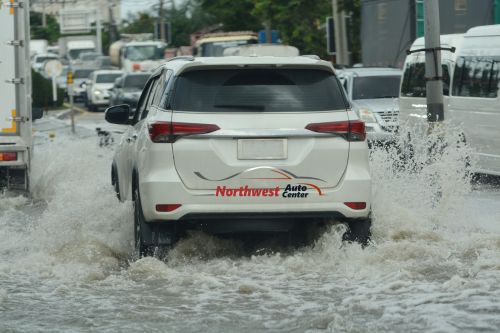
Vehicle Water Damage: How Can You Tell?
Electronics: Corrosion That Starts Small
Modern vehicles carry dozens of control modules, connectors, and wiring harnesses, many of which sit under the seats, behind the kick panels, or low in the engine bay. Floodwater is not clean water. It carries silt, oil, and sewage that stay behind after the water dries.
That residue holds moisture and corrodes the metal pins inside connectors. The symptoms are intermittent: a window that stops working, a warning light that comes and goes, a battery that drains overnight. Because corrosion spreads slowly, these electrical problems often appear long after you forget the storm.
Wheel Bearings: Grease and Water Do Not Mix
Wheel bearings are sealed, but those seals are meant to keep out splash and dust, not to keep out water when the hub sits underwater. Bearings also run warm; when a warm hub hits cool floodwater, the air inside contracts and can pull water past the seal.
Once inside, water thins the grease and starts rust on the bearing surfaces. The first sign is usually a humming or growling noise that gets louder as speed increases. On many vehicles, a worn bearing also triggers an ABS light, because the wheel speed sensor reads from the same hub.
Fluids: Contamination Hidden From the Driver’s Seat
Differentials, transmissions, and transfer cases have vents that let air move in and out as they heat and cool. If you submerge a hot axle, that vent can draw water in. Water-contaminated gear oil or transmission fluid turns milky and loses its ability to protect gears, clutches, and bearings.
Left alone, contaminated fluid leads to some of the most expensive repairs on a vehicle. Engine oil is worth checking too. Milky oil on the dipstick means water is in the engine, and you shouldn’t drive the vehicle until you drain and refill it.
Sensors: Small Parts, Big Consequences
Sensors are some of the most exposed parts on a vehicle. Wheel speed sensors sit at each hub and feed the anti-lock brakes, traction control, and stability control. Oxygen sensors thread into the exhaust under the floor, where cold water on a hot sensor can crack its ceramic element.
A sensor that reads wrong does not always fail outright. Instead, it causes rough shifting, poor fuel economy, or a check engine light with no obvious cause.
What to Do After Driving Through Floodwater
The safest choice is always to turn around. The National Weather Service warns that 12 inches of rushing water can carry away most cars. If a vehicle has already been through high water, a prompt inspection is the best protection. A thorough check includes:
- Scanning the onboard computers for stored trouble codes
- Inspecting connectors and wiring for moisture or corrosion
- Checking differential, transmission, and engine fluids for water
- Listening for bearing noise and inspecting the brakes
Northwest Auto Center of Houston has served local drivers for more than 30 years with honest diagnostics and fair pricing. Call (281) 894-8880 or stop by to schedule an inspection before a small problem becomes a major repair.






Leave A Comment
You must be logged in to post a comment.